
The term 6K TV box has been popping up everywhere lately. Some brands even suggest that 6K makes 4K obsolete, while others are already teasing 8K as the “true future.” But when you strip away the marketing language, a real question remains: Is a 6K TV box actually worth buying right now, or is it simply ahead of its time? In this article, we take a grounded, practical look at what a 6K TV box really offers.
What Exactly Is a 6K TV Box?
A 6K TV box is a streaming device capable of outputting video at resolutions higher than 4K, up to 6K under the right conditions. However, this does not mean that all content will magically appear in 6K.

What separates a 6K TV box from a standard 4K box is its processing power. These devices are typically built with stronger chips, improved video decoding, and better upscaling capabilities. That means a good 6K TV box can deliver cleaner edges, more accurate colors, and smoother motion — especially noticeable on larger screens.
6K vs 4K vs 8K: Where Does 6K Actually Fit?
Many people assume that higher resolution automatically means a better viewing experience. In reality, it’s not that simple.
Today, the vast majority of entertainment content — movies, TV shows, and streaming platforms — is produced in 4K at best. That already represents a very high standard for home viewing. Native 6K content exists, but it’s extremely limited and is usually found in professional photography, select high-end video productions, or rare studio projects. Even in filmmaking, true 6K releases are uncommon. As for 8K, it remains largely impractical for everyday consumers.
| Aspect | 4K TV Box | 6K TV Box | 8K TV Box |
| Mainstream content | Widely available | Limited | Extremely rare |
| Hardware maturity | Very stable | Mature and improving | Still experimental |
| Visual improvement | Good | Noticeable on large TVs | Hard to justify |
| Practical value today | High | Medium–High | Low |
Because of this, claims of “8K TV boxes” or “true 8K content” should be approached with caution. In most cases, these are marketing terms rather than reflections of real-world content availability. Even if you own a TV that technically supports 4K, 6K, or 8K, the visible difference is often minimal in a typical home environment. On smaller screens, the improvement is almost impossible to notice.
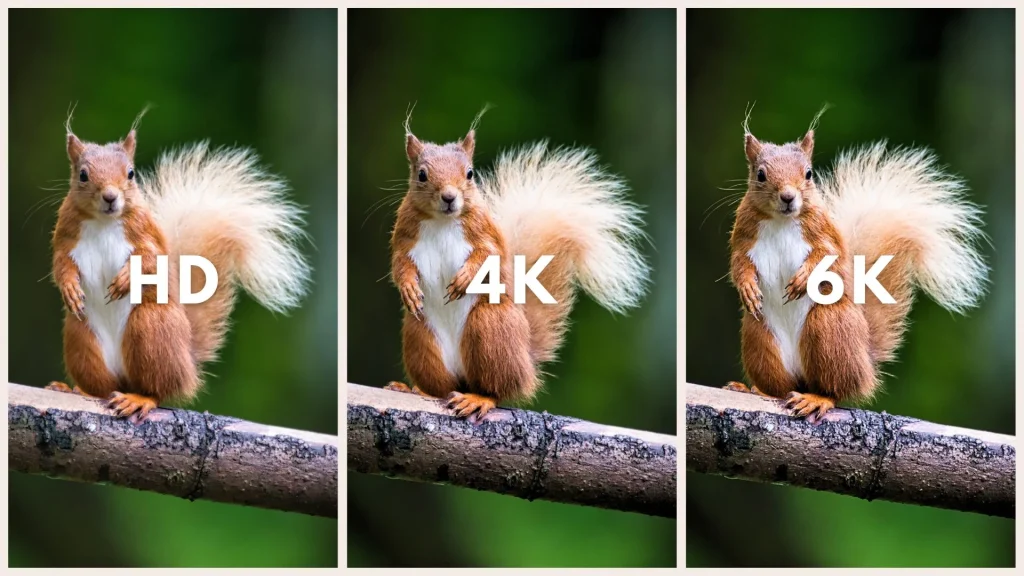
For most people, watching ultra-high-resolution content at home simply isn’t a necessity. The difference between 4K and higher resolutions often matters more in professional editing, photography, or large-scale commercial displays than in everyday living rooms.
This is why 6K sits in a realistic middle ground. It doesn’t exist to replace 4K overnight or to compete with 8K hype. Instead, it offers better processing headroom and more refined image handling — benefits that are subtle, practical, and far more relevant to real users.
The Real Downsides of 6K TV Boxes
Understanding these downsides helps set realistic expectations — and avoids paying for features you may not fully use yet.
Limited native 6K content
This is currently the biggest limitation. Native 6K content is rare, and major platforms like Netflix, Amazon Prime Video, Disney+, and Apple TV+ currently focus on 4K as their highest standard. Even their premium tiers rarely go beyond that. While some platforms may experiment with higher-resolution masters internally, consumers almost never receive native 6K streams. As a result, a 6K TV box spends most of its time enhancing lower-resolution content rather than showcasing true 6K video. While that enhancement is real, it’s important to keep expectations realistic.
Here’s where 6K content actually exists today:
- YouTube: The most accessible source for 6K videos, but the content is mostly travel footage, drone shots, nature scenes, and technical demos rather than movies or series.
- Vimeo: Hosts a small amount of 6K content uploaded by independent filmmakers and studios, usually for showcasing cinematography rather than casual viewing.
- Stock footage platforms: Websites like Shutterstock, Pond5, and Artgrid offer genuine 6K clips, but these are paid assets created for professional editing, not streaming entertainment.
- Locally stored media: Many 6K videos come from professional cameras and are played through USB drives, NAS systems, or personal media libraries instead of online streaming services.
Display compatibility matters
Many older TVs are limited to HD or lower, while most modern consumer TVs today still top out at 4K. In these cases, if your TV does not support 6K, native 6K content cannot be shown at its true quality. The box cannot override the physical limits of the display.
Because of this, display compatibility plays a major role in how much improvement you’ll actually see. A 6K TV box is best viewed as a long-term upgrade — one that prepares your setup for future displays — rather than a guaranteed instant leap in image quality on every TV.
So, Should You Buy a 6K TV Box?
A 6K TV box is not a must-have for everyone. And it doesn’t pretend to be. If you’re satisfied with your current 4K setup and don’t plan on upgrading your TV anytime soon, sticking with what you have makes sense. But if you value image refinement, smoother performance, and long-term usability, a 6K TV box can be a smart step forward. Ultimately, a 6K TV box is less about chasing the highest resolution today and more about owning hardware that won’t feel outdated tomorrow.
A Good 6K TV Box Worth Considering Today
With so many devices claiming to be the “best” 6K TV box, it’s important to look beyond resolution alone. A truly good 6K TV box should offer more than just a spec on paper. It needs stable performance, a smooth user experience, and flexibility in how you access content.
One option that stands out in today’s market is DingBox D2, a fully loaded Android TV box designed for users who want convenience without constant setup or subscriptions. Unlike basic Android TV boxes that require users to install and configure everything from scratch, DingBox comes ready to use out of the box.
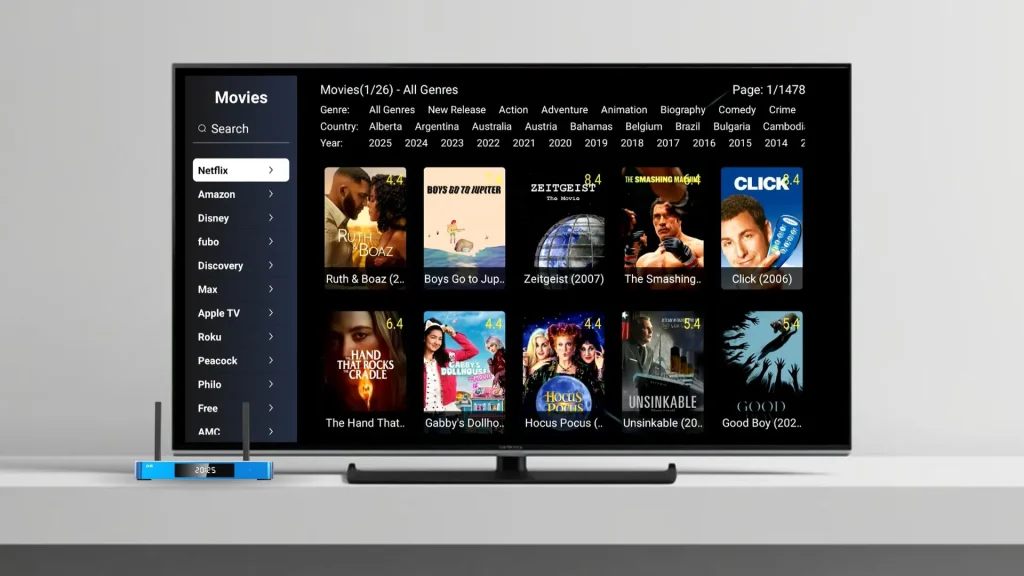
As a 6K TV box, DingBox supports high-resolution playback and handles 4K content effortlessly, which is what most users actually watch today. The advantage isn’t just resolution — it’s the overall smoothness when navigating apps, switching channels, or playing on-demand content.